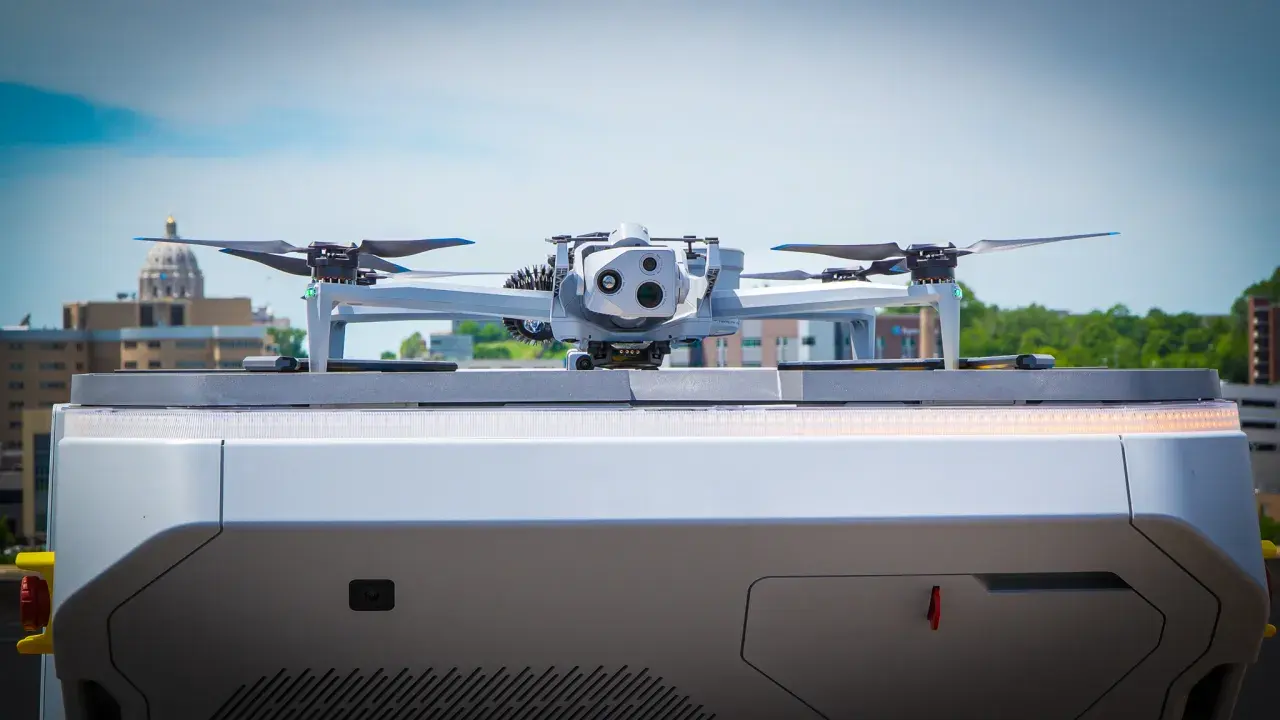
Docked Drone Program (DDP) Frequently Asked Questions
Question: How does this improve police response?
Answer: Speed and information. A drone can launch within seconds and reach most locations in its coverage area in minutes. That early aerial view allows officers to:
- Confirm whether a suspect is present or has left.
- Identify weapons or hazards.
- Locate victims or injured persons.
- Determine if additional resources are necessary.
In many cases, that early intelligence prevents unnecessary risk and helps ensure we send the right level of response.
Question: How does this impact officer and community safety?
Answer: It enhances safety for everyone. Better information reduces the likelihood of misjudgment and escalations. For example:
- In a weapons call, the drone can determine whether a suspect is armed before officers approach.
- In a burglary or alarm call, the drone can clear rooftops or backyards before entry.
- In a large crowd event, it provides real-time awareness without placing officers in elevated risk positions.
Question: What about privacy concerns?
Answer: Privacy protections are foundational to the program. Key safeguards include:
- Drones are deployed only for calls for service – not for general surveillance.
- All flights are logged, documented, and auditable.
- Video will be retained for seven days according to State Statute unless classified as evidence.
- The drones do not have facial recognition or other biometric-matching technology.
Question: What types of calls would drones respond to?
Answer: In many of these situations, drones allow us to de-escalate, allocate resources more efficiently, and sometimes resolve incidents without requiring extensive physical searches. Examples include:
- Weapons complaints.
- Robbery or burglary in progress.
- Missing persons.
- Vehicle pursuit termination location searches.
- Crash scenes.
- Large-scale emergencies or natural disasters.
Question: How will success be measured?
Answer: This program will be data-driven. We will track measurable outcomes, including:
- Time-to-arrival ahead of patrol units.
- Reduction in officer risk exposure.
- Clearance rates for certain crimes.
- Enhanced community safety through de-escalation due to drone assistance.
- Community feedback.