Fighting gun violence before a shot is fired
Accountability for gun violence is necessary for community safety. But lasting safety in Saint Paul starts earlier—by supporting young people, strengthening families, and investing in communities to prevent violence before it happens.
The Office of Neighborhood Safety’s Project PEACE team works with people who are at the greatest risk of gun violence—primarily boys and young men from communities that have been historically under-resourced—by providing practical support and meaningful, trusted relationships that help build stability and opportunity. When shootings do occur, the team supports those harmed, those involved, and their families while law enforcement handles the investigation, helping reduce the risk of retaliatory violence and strengthen trust within the community.
When Project PEACE first began in 2021, they were mostly responding to shootings — so they’d meet many of their clients at the hospital. “You’ve got a family who’s distraught; someone’s hurt or injured,” remembers ONS office manager Shyrisse Tisdle. “You’re there to support the family in any way possible. You have law enforcement coming in and out — we focus on who needs our support in that moment.”
Today, most of Project PEACE’s work happens upstream of shootings, so the team spends less time at the hospital. But their focus on supporting everyone involved who needs support remains the same.
Their approach is working. In concert with other City violence prevention strategies, Project PEACE has helped make Saint Paul dramatically safer, every year since the program began. “Gun violence has been down this year,” says outreach specialist Dominique Johnson. “Yes, our work is still needed. But look at where we’re at compared to five years ago!”
From hesitation to partnership: how Project PEACE earns a place in families’ lives
That success depends on the relationships team members build with some of Saint Paul’s under-resourced, trauma-impacted residents — people who have limited reason to trust people representing institutions. Because many of the clients who are referred to the program are young men under 18, Project PEACE team members also work to earn the trust of parents and guardians.
“When we get referrals directly from law enforcement,” explains program manager Faith Lofton, “parents and others can be a little hesitant, assuming that we are law enforcement ourselves. “Part of our role is clarifying that, while coordination is necessary to help prevent gun violence, we’re a supportive team, independent from law enforcement. Another challenge is a history of broken promises from other organizations or institutions. “Some service providers have over-promised and under-delivered,” Faith adds, “so people are understandably cautious. They ask, ‘What are you going to provide that’s different?’”
Project PEACE team members say their unique status — full-time City employees, reporting to the Office of Neighborhood Safety — helps them overcome that reluctance and earn the trust of the people and families it’s their mission to support. “If your city cares about you, they’ll put the money and effort into helping you,” says Dominique. “Nonprofits have empathy and caring, but when it’s the City — it brings that heart work into government,” as part of the democratic process.
Bringing violence prevention in-house has allowed Saint Paul to recruit and retain exceptional staff from the community with both professional and lived experience. Being part of local government gives the team unique insight and reach, allowing them to lead collaborative efforts while connecting people and families with trusted community-based organizations that provide programs, supports, and vital connections. “Our office helps legitimize this work,” Faith says. “We have strong connections with Saint Paul Parks & Rec, Saint Paul Public Libraries, SPPD, local schools and legal institutions. That coordination allows us to respond quickly, share critical information across systems, and align resources to better support residents and prevent violence. That’s why we’re part of the City structure.”
As the years pass, Project PEACE — and ONS beyond it — are changing how people in Saint Paul neighborhoods think about their City. “We are building a reputation in the community,” Faith explains. “We have our ONS gear on! We have very bright City colors that we wear so we are recognized.” And Project PEACE recently hired two new outreach workers, Undre Ellis and Juddah Battles, to build awareness even more.
A day in the life of the Project PEACE team
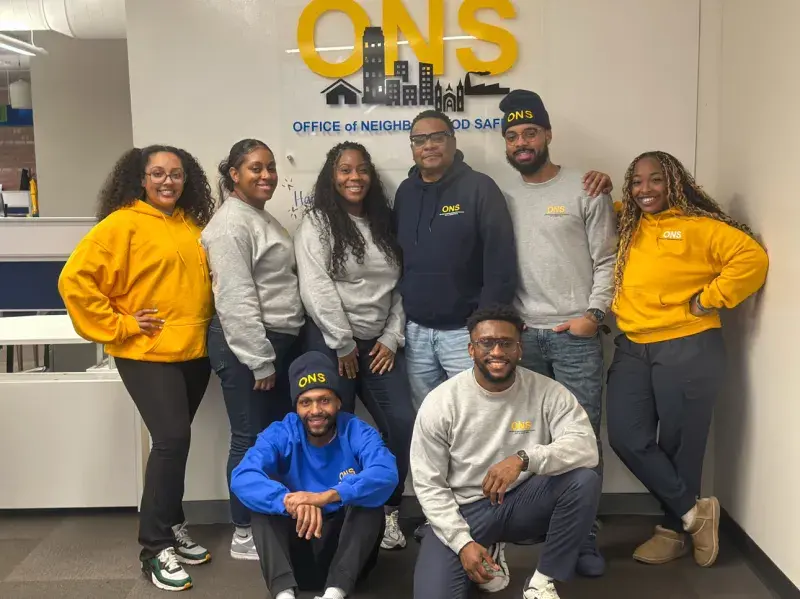
How does Project PEACE work? Faith explains: “We provide wrap-around services to engage people, additional supports to address underlying social determinants of health: mental health support, financial support, employment, programming to shift mindset. Anything that focuses on those underlying issues that could lead to violence.”
In practice, that means showing up for people — mostly teenagers and young adults — consistently, with unwavering support and what ONS calls “relentless engagement.”
“Today I’m going to meet a client at his school,” says case manager Andre Knight. “He’s a sophomore. He recently lost his grandmother, and he’s now under the guardianship of his uncle. He’s been missing a lot of school, and we’re concerned about his wellbeing. So we’re going to come up with a plan to talk to his uncle.” After that, Andre will meet with the mother of another Project PEACE client, who’d been getting into trouble at school, to find a way to keep the boy safe. He’s also supporting other clients as they get their GEDs, helping their families find safe housing after gunfire at their homes, and advocating for them at court hearings by sharing their progress toward their goals.
Case management and life coaching takes patient relationship-building — and setbacks are inevitable on the path to change. After doing well for a while, one of case manager Dejay Johnson’s clients ended up back in the juvenile detention center. “I still connect with him every day,” says Dejay, “giving him that positive encouragement, regardless of where he’s at. So when he gets out, I don’t have to rebuild: we’re building that connection and that bond.” For every setback, there’s a triumph. “One of my other clients just got a job. He’s enjoying it, showing up on time. He’s growing up right in front of my eyes. And he’s trying to bring his little brother to follow in his footsteps, the right footsteps.”
The hard work of change: “You see hope, and you push it forward”
The work of Project PEACE is sometimes heartbreaking and always challenging. But for the 10 people on the team so far, it’s a labor of love.
Faith, the program manager, came to this work after a career in program development and leadership across mental health, homeless services, and social justice organizations. “As a mother of three Black boys, this work is close to my heart — especially being from the City, in Rondo. I work with the communities I came from.”
“We all have connections here,” Dejay agrees. It’s coming back to somewhere we were born or raised, giving back to the youth. I didn’t like locking kids up, or being in schools. Now I’m in the community working with them.” Case manager Jeria Jenkins had a similar journey: “I worked with adults in multiple counties, but now I can focus on Saint Paul, where I was born and raised. For me, that’s been a really good motivation.”
It’s personal for this team, but it’s more than that. For outreach specialist Juddah, the work is about helping people overcome history and “helping clients know about systems and themselves.”
Project PEACE restores our sense of shared humanity, one interaction at a time. “When you come in and have a conversation with the young person, then six or eight months later, you see how they’re taking on self-empowerment — it’s really rewarding, says Andre. “You see hope, and you push it forward.”