A New Direction for an Old Friend
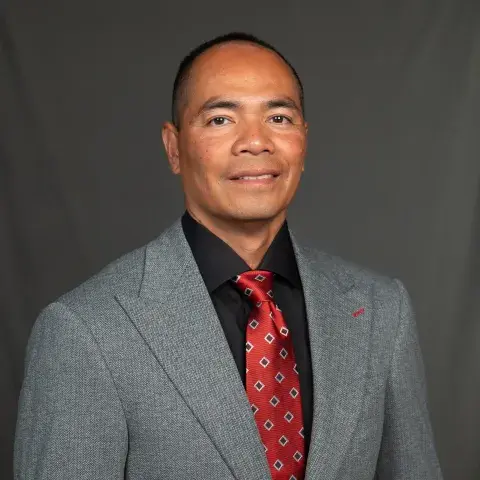
When Mayor Kaholy Her asked Toy Vixayvong to lead the Office of Neighborhood Safety earlier this year, he asked for a month to think it over. “I kept thinking, ‘Am I the right fit?’” he recalls.
Toy’s doubts were principled. ONS employees work one-on-one with the Saint Paul residents who are most at risk of violence—people who often don’t trust law enforcement. Could a 25-year veteran of the Saint Paul Police Department, known all over town as “Officer Toy,” lead the City department that works hard to keep people out of the criminal-justice system?
To find out, Toy spent that month talking to the people in Saint Paul who’d come to know and trust him over his quarter-century of service to the City.
“I went out and asked nonprofit organizations, teachers and principals, community leaders from all different groups,” he says. “They told me, ‘You’ll be great, because you speak for the community.’ This community is where my heart is, and the community knows who I am. That’s what sold me.”
In May, Toy officially became the third-ever director of ONS, replacing now Assistant Mayor Cedrick Baker. Four months into the job, he doesn’t regret his decision.
“I’ve always been into helping the community,” says Toy. “I can only do so much as a police officer. But in this job, I have a bigger opportunity to be a liaison between ONS, the police department, Saint Paul Public Schools, and the whole community. I can make a bigger difference here.”
From Laos to Minnesota, Community First
Director Vixayvong’s commitment to community started many years ago, when his family fled postwar Laos for Minnesota. “I came here when I was six,” he remembers. “It was culture shock. Winter was very cold! We just had to adjust.”
That they did. Toy’s parents worked hard to support their local Lao community, in Austin and then in Richfield, helping newcomers find their footing and make a home. “I look up a lot to my parents,” he says. “We had other families staying at our house, and they were always out there in the community.”
That formative experience of community service as a way of life inspired Toy to become a police officer, specializing in community engagement and one-on-one outreach to young people. His pioneering work as a school resource officer, interrupting cycles of criminalization and giving Saint Paul young people a chance to thrive, made local and national headlines.
Throughout his career and still today, Toy earns trust in Saint Paul communities by showing up with humanity and compassion.
“People have stories,” he says simply. “Kids act out for a reason; I want to figure out why. People who get arrested—there’s always a story to explain how they got there. I believe in treating everyone as a decent human being. I have respect for them and I listen to their stories.”
Strengthening Partnerships to Keep Saint Paul Safe
Toy’s community-first, human-to-human approach is already making the Office of Neighborhood Safety stronger. He has strengthened the relationship between ONS and the Saint Paul Police Department’s non-fatal shootings and community outreach units so the Project PEACE team can reach out to people affected by gun violence—or at risk of getting involved—more quickly and effectively.
His work is just getting started. “Building the relationship is the easy part,” says Toy. “The real work is uplifting the work that ONS does to keep Saint Paul safe. People don’t know much about what we do yet. That’s what I intend to change.”
More Neighborhood Safety News
Familiar Faces: How Saint Paul Workers Help Get People Off the Streets to Safety
Eighteen months ago, 50 of our most vulnerable Saint Paul neighbors were living on the streets, with no safe place to sleep at night. Today, all 50 are in safe and stable housing. That’s because of a new program from the City’s Office of Neighborhood Safety called Familiar Faces, our City’s front-line response to unsheltered homelessness. Meet the tiny team that does the work.
Read More2026 ONS Contract Partners: Mid-Year Report
This year, the Office of Neighborhood Safety (ONS) and the Neighborhood Safety Community Council contracted with four to pursue innovative projects to keep Saint Paul safer. Halfway through the contract period, here’s a report on how they’re doing.
Read MoreResearch: “Project PEACE is Delivering”
Over two years, experts from from the Minnesota Justice Research Center worked closely with Project PEACE, Saint Paul’s homegrown gun-violence prevention program, to evaluate the program as it was developing. They released their findings today. Here’s the headline: “The data suggest Project PEACE is delivering. Project PEACE life coaches are keeping people safe, alive, and free—and the clients, families, and community members we spoke with made clear that this work matters.” Here are key findings, recommendations, and a link to the full report.
Read MoreApplications are Now Open for 2027 ONS Neighborhood Safety Partnerships
Every year, the Office of Neighborhood Safety contracts with community organizations to undertake innovative projects to help make Saint Paul safer for all. Applications to work with us in 2027 are open through September 7. We are looking for projects in five key areas: culturally specific violence prevention, support for unhoused neighbors, reducing drug use in City spaces, capacity-building for small organizations, and education for at-risk residents. Find out what we’re looking for and learn how to submit your proposal.
Read MoreHow One Army Veteran Found a Home in Saint Paul
Since the program began in late 2024, the Familiar Faces program has helped more than 50 people get off the streets of Saint Paul to find safe, permanent housing. Every journey from homelessness to home is a hard-won victory for the team and their clients. But their latest success story is special. Meet Randall Todd, a veteran of the U.S. Army mobile infantry, who can see the bridge where he used to sleep from the windows of his new apartment.
Read More