Color Contrast
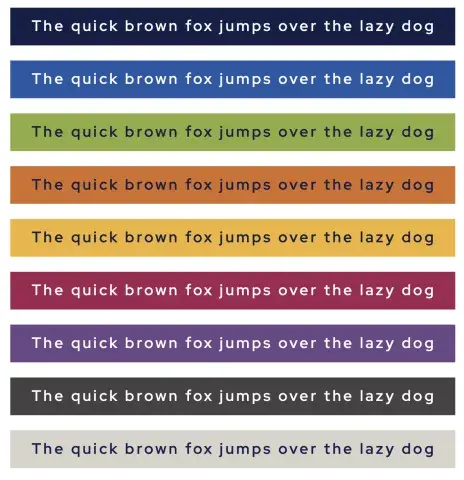
Use these background and foreground colors together to ensure your design has enough contrast.
In 2020, the City of Saint Paul launched the Brand Upgrade Project to create consistent guidelines and update key assets—like colors, logo, and typefaces—for accessibility and digital scalability. Since then, we’ve continued to evolve and expand the brand to meet residents’ needs. Please follow these guidelines for consistency across all communications and touch points.
Last Edited: January 30, 2026
To help residents stay informed and build trust by delivering clear, consistent, and accessible communication across all City of Saint Paul platforms.
A future where every interaction with the City reflects transparency, unity, and reliability—building a brand that connects people and government seamlessly.

Inspired by Saint Paul’s many lakes, this shade of blue takes its name from the literal meaning of the Dakota word “Minnesota,” or “Land of the Sky-Tinted Waters.”
PANTONE 2133 C
CMYK: 94-67-0-0
RGB: 29-87-165
HEX: #1D57A5 / #2367D3 (web only)

Inspired by the confluence of the Mississippi and Minnesota rivers (“Big Rivers”) at B’dote, the sacred Dakota site located near the southwestern corner of Saint Paul.
PANTONE 2768 C
CMYK: 100-78-0-66
RGB: 7-29-73
HEX: #071D49

Inspired by the verdant floodplain forests, oak woodlands, prairies and other native ecosystems of Saint Paul.
PANTONE 2300 C
CMYK: 36-0-87-2
RGB: 169-194-63
HEX: #A9C23F

Inspired by the gleaming golden sculpture group at the base of State Capitol dome titled “The Progress of the State,” commonly referred to as the Quadriga.
PANTONE 143 C
CMYK: 0-27-85-0
RGB: 241-180-52
HEX: #F1B434

Sugar Maple Orange captures the vibrant warmth of Minnesota’s autumn, inspired by the brilliant hues of maple trees that light up the city each fall.
PANTONE 716 C
CMYK: 0-50-93-1 6
RGB: 214-108-15
HEX: #D66C0F

Inspired by the brilliant magenta shades of Minnesota’s state flower, Cypripedium reginae which is found living in open fens, bogs, swamps, and damp woods of Minnesota.
PANTONE 2041 C
CMYK: 4-98-27-27
RGB: 161-34-78
HEX: #A1224E

Our signature purple is inspired by the rich hues of Minnesota’s native corn, a symbol of heritage, resilience, and natural beauty.
PANTONE 7672 C
CMYK: 21-47-0-47
RGB: 107-72-135
HEX: #6B4887

Granite Gray reflects the enduring strength and timeless elegance of the Cathedral of Saint Paul’s granite façade—a foundation that grounds its soaring dome and iconic architecture.
PANTONE Warm Gray 1 C
CMYK: 10-10-11-0
RGB: 215-210-203
HEX: #D7D2CB

Inspired by the Cathedral of Saint Paul’s dramatic 120-foot-wide dome made of curved steel beams, and covered with clay tiles.
PANTONE 4287 C
CMYK: 66-62-55-54
RGB: 69-65-66
HEX: #454142
Use these background and foreground colors together to ensure your design has enough contrast.
The fonts below have been deployed to your workstations. Due to Microsoft Office 365 cloud font limitations, we are also including Microsoft Office equivalents that you can use in the Office 365 online environment (the online versions of Word, PowerPoint, etc.).
To ensure the City’s logo is used consistently, do not alter the logo lockups. Avoid any of the following alterations to the City's logo.
The City of Saint Paul Seal is reserved for use by elected officials, staff members of elected officials, and other formal or commemorative uses. The City Clerk has sole custody of the Seal and authority to determine which official documents will display the Seal, as enumerated in Sec. 4.02 of the City Code. Any other use of the City Seal requires approval from the City Clerk’s Office, with the exception of the following pre-approved uses: