Monument and Benchmark Information and Classifications
Last Edited:
May 8, 2026
Survey monuments and vertical benchmarks are vital to the projects undertaken by the Department of Public Works. Here are some frequently asked questions about them.
A survey monument is a permanent physical marker placed in the ground or attached to a structure to identify an exact surveyed location. Monuments are used to mark property corners, boundary lines, right-of-way limits, control points, and other reference locations. They allow surveyors to accurately retrace previous surveys, establish new measurements, support construction projects, and resolve boundary questions.
Monuments are important because they provide long-term physical evidence of surveyed positions and help maintain consistency in land records over time.
Survey monuments can vary depending on age, purpose, and location. Common examples include:
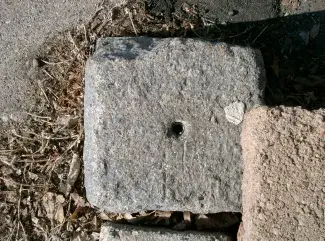
• Granite monuments
• Cast iron monuments (CIM)
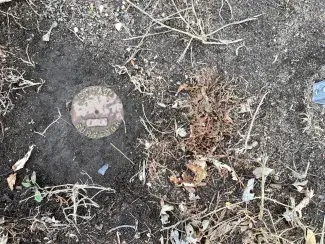
• Iron pipes or open pipes with caps • Iron rods or rebar with caps • Aluminum disks or caps • Brass disks or caps • Concrete monuments • Stone markers • Chiseled “X” marks in concrete or stone • Mag nails or spikes in pavement
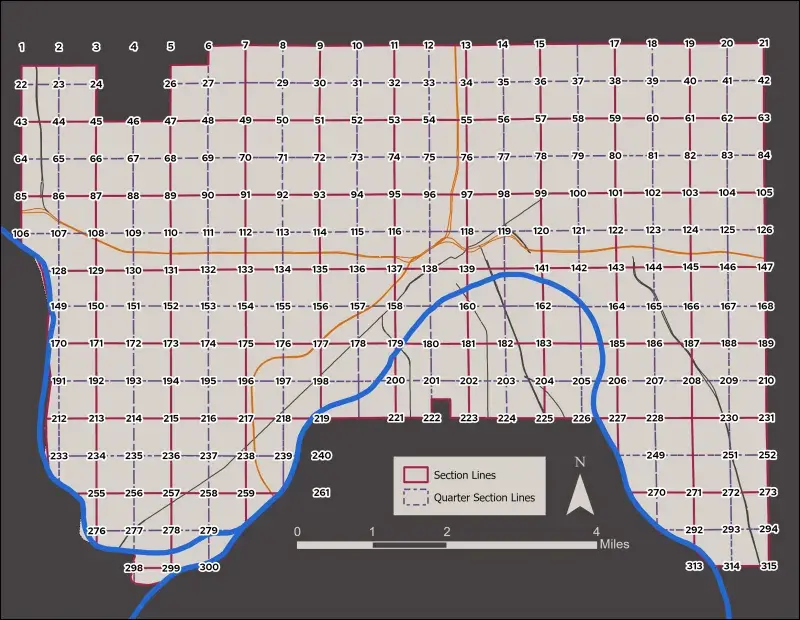
PLSS Monument: A PLSS monument is tied to the Public Land Survey System (PLSS), which is the system used to divide land into townships, ranges, and sections. These monuments often mark section corners, quarter corners, or other subdivision corners established as part of the original government survey system. In the City of Saint Paul, many of these section boundaries run along public streets so many PLSS monuments are in the center of intersections.
Non-PLSS Monument: A non-PLSS monument is any monument not directly related to the Public Land Survey System. These are commonly used for property corners in platted areas, subdivision monuments, block corners, right-of-way monuments, construction control points, or local survey control.
In general, PLSS monuments are part of the larger land grid system displayed below, while non-PLSS monuments are used for local boundaries and project control.
No. Survey monuments should not be disturbed, removed, or covered without proper authorization. Damaging a monument may violate state law and create costly boundary issues.
Contact the City Surveyor or local public works department before disturbing the monument. If the monument has already been disturbed, contact the City Surveyor or local public works department so they can prepare to replace the monument.
Benchmark Information and Classifications
A vertical benchmark is a permanent reference point with a known elevation above a recognized datum. Benchmarks are used to determine heights or elevations for surveying, drainage design, street construction, utility work, flood studies, and other engineering projects.
They help ensure that elevations used on projects are accurate and consistent for the surrounding area.
Common examples include:
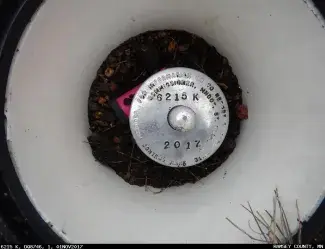
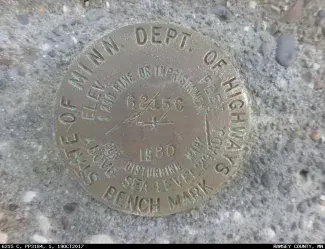
• MnDOT geodetic benchmark disks
• National Geodetic Survey benchmark disks • Brass or aluminum disks set in concrete • Bridge benchmark disks
• Building-mounted benchmark tablets • Chiseled squares or marks on structures • Fire hydrant reference elevations (where designated) • Utility structure rims or castings used as local reference points • City control monuments with known elevation